Insights and knowledge about Ugandan nature-based religions and traditions
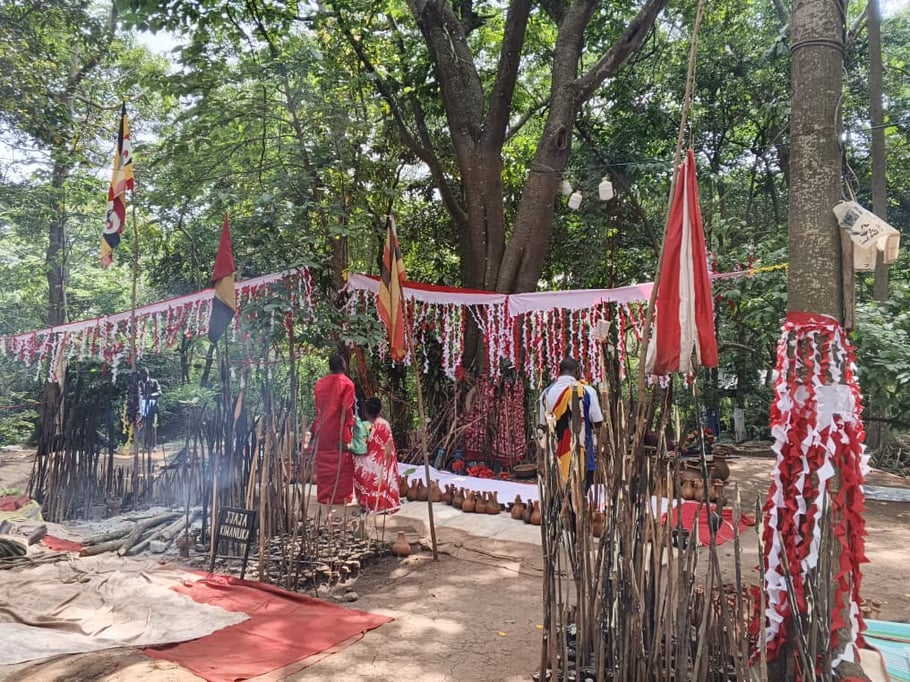
In Uganda, traditional knowledge about herbs, natural medicine, and living in harmony with the laws of nature is passed down from generation to generation. Unexplainable events are often interpreted as the influence of spirits. Dreams are taken very seriously, and there are elaborate rituals to have them interpreted. People in Uganda are deeply religious: there are Christians, Muslims, and various nature-based religions. These religions, similar to Hinduism, are oriented toward a multitude of gods, each responsible for a specific area of life.
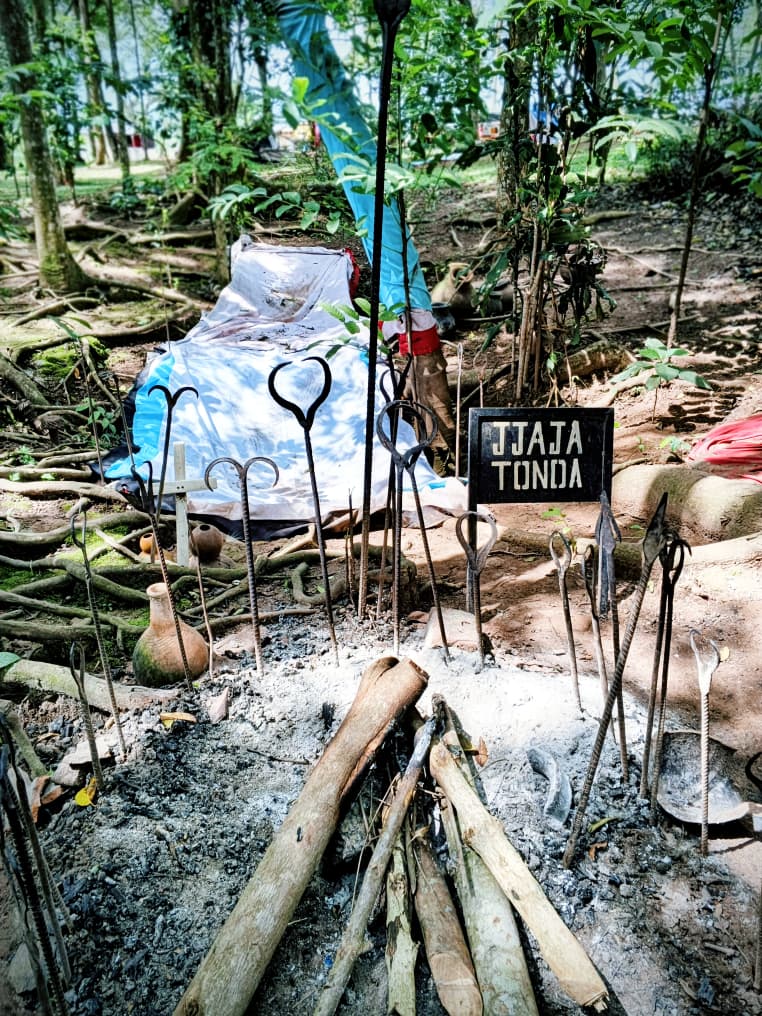
In the West, these thousands-of-years-old spiritual traditions are often devalued and trivialized as “voodoo” or “devil worship.” Sometimes they are even mocked, because the complexity of these belief systems challenges many people in Europe and confronts them with a fear of the unknown. Yet for the people here, (nature) religion offers a strong anchor in life and provides hope that difficult life situations and unexplainable illnesses can be healed.
In Mytinga, a town about two hours by car from Kampala, there is a sacred pilgrimage site for believers. Foreigners like myself are also welcome and can join a guided tour to learn about the customs, traditions, and religious practices of nature religions. That is exactly what I did last weekend. The two most important things to bring on this day trip—and also when reading this article—are complete open-mindedness and radical curiosity.
A young Ugandan woman kneels in front of a tree that is hundreds of years old. She holds two rattles in her hands, giving rhythm to her prayers. A few weeks ago, she gave birth to a snake. At this pilgrimage site, she is being cleansed of evil spirits and prays to Mugabwe, the snake god, so that she can finally give birth to a human baby. She has brought ten raw eggs as an offering, meant to resemble snake eggs. One by one, the eggs are destroyed as she throws them into a deep pit. The biting smell of all the smashed raw eggs suggests that she is far from the only woman with this “problem.” Six family members, including her husband, accompany her. My tour guide—let’s call him Razul—confirms when I ask that many women in Uganda give birth to real snakes.
Before I was allowed to observe this ritual, I too had to follow the ritual steps required at this sacred place. First, shoes and socks are removed, and you walk barefoot on the red earth across the entire site. Then I had to confirm that I was not currently menstruating. A cloth was tied around my hips, since women are not allowed to wear trousers—just like in prayer sites of all major world religions. After that, I was welcomed into the house of the king, although only his spirit is present, not his physical body.
It is a dark room. Only a small fire allows outlines to be seen. Palm oil is regularly poured onto the fire, creating a pleasant smell. Various offerings—such as jewelry, fruit, weapons, and money—are arranged in the center of the round house. I placed my hands on an artwork made of shells, and then prayers began. A pilgrim next to me explained: “You must never ask for anything bad or good for others. You may only pray for yourself. For example, you can ask for more money, for health, or for a peaceful relationship.” I had to leave the king’s house walking backward, just as is done in Buddhism or Islam.
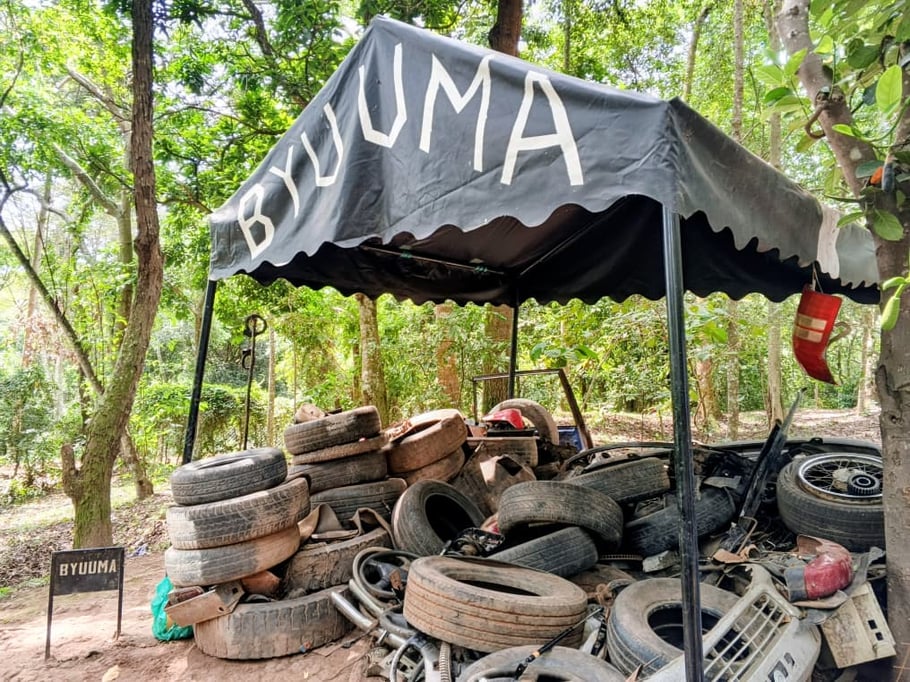
Now that I was officially initiated, Razul and I could move freely around the vast site. From some corners, drum rhythms can be heard; from another, hysterical crying; and from the outdoor kitchen, cheerful laughter while cassava is being chopped for lunch. Some pilgrims come only for one day. But the majority camp on the grounds for weeks—some for years. This is not their own decision but is determined by the interpretation of dreams. Even the exact place where one sets up their sleeping area is not assigned; instead, people follow their intuition.
Some pilgrims come alone, others in groups. The overall atmosphere is peaceful and calm, even though there are extremely large crowds. Some groups are chatting over coffee, while others are deeply immersed in rituals. In one ritual, a chicken is brought as an offering. Still alive, it is placed on the altar of the god Bataka. This god is responsible for ending misery in life and ensuring existential security. Without being touched again, the chicken slowly loses its energy on the altar until it peacefully falls asleep and never wakes up. Then, the pilgrim’s prayers are fulfilled.
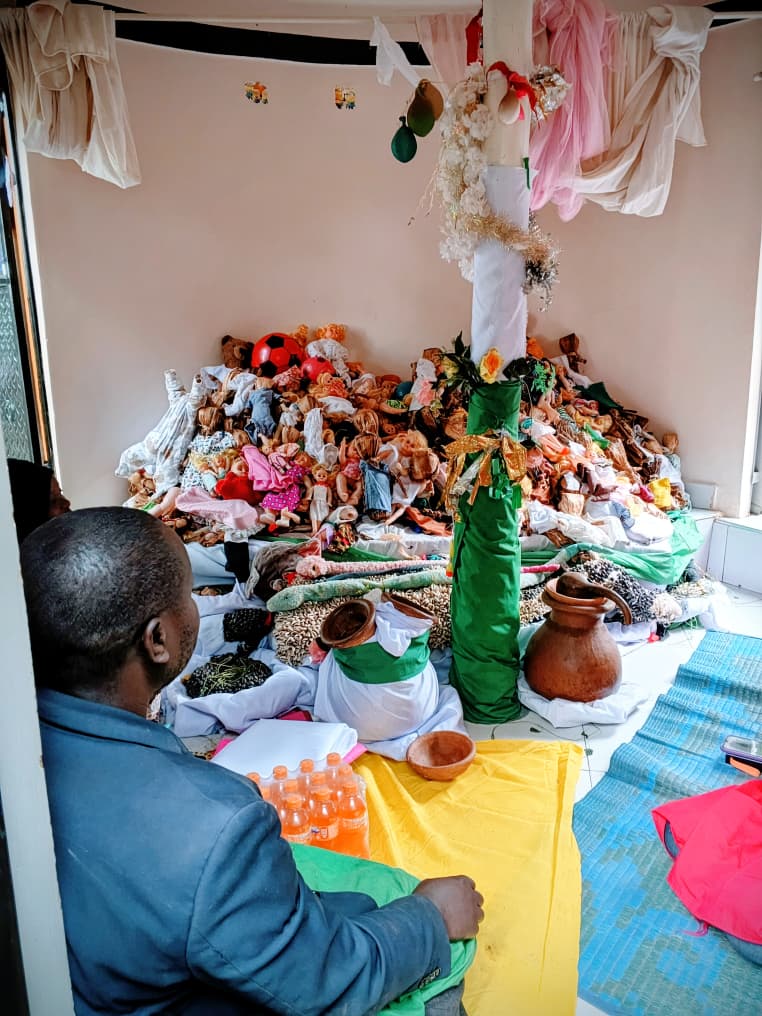
In another banda (round house), naked dolls are stacked on top of each other. What initially looks a bit creepy has a very beautiful meaning: here, believers can pray for twins. In Uganda, twins have a special cultural and spiritual significance. In many Ugandan cultures, twins are seen as something supernatural or spiritual. They are often considered a sign of blessing, luck, or special power—not a coincidence. In the Ugandan language, there are even special words for “father of twins” and “mother of twins.”
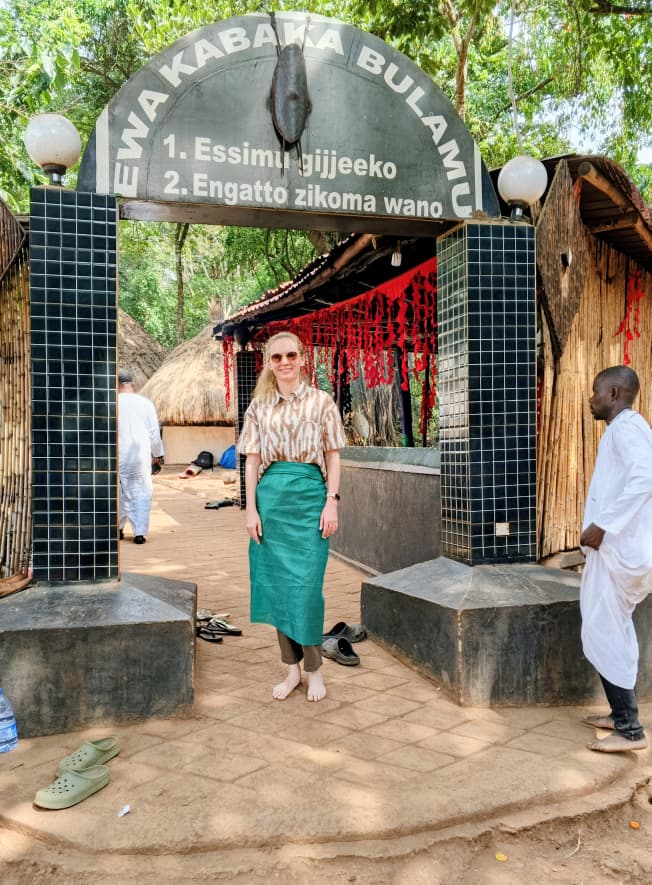
The people in the sacred camp are happy about my visit. They observe me closely, give me tips on how to behave more respectfully at the altars, and laugh back when I greet them with “Osibie Otya! Olya Otya?” One woman speaks to us directly: “Thank you for your visit. This is a divine sign. It means that next week will be prosperous and rich for us.” My skin color also seems to play a role in this interpretation.
A Bob Marley flag hanging above a shrine catches my attention. I ask Razul about it. This area is the prayer site for people who are addicted to alcohol or other drugs. They must spend and sleep one full week in front of the altar. Every day, they receive a free beer. At the end of the week, they are able to control their addiction and are no longer dependent on drugs.
On the way back to the car, a chicken walks in front of me. It looks exactly like the one that was placed on the altar a few hours earlier. “Isn’t that…?” I ask, surprised. “No, that’s a different one,” Razul replies.
Practical Information for Visitors
Location: The site is listed on Google Maps as Tintda Pits. not far from the city called
Mityana
Entrance Fee: Foreigners pay 20,000 UGX at the entrance. A donation for the guide is expected; 20,000 UGX is recommended.
Opening Hours: The site is always open; no reservation is required.
Clothing: Women should wear a long skirt. One can also be borrowed on site.
Important: This place is extremely sacred to Ugandans. Visitors should behave with the highest level of respect. Questions for understanding are
welcome, but rituals or gods should not be questioned—just as in any other religion. It is recommended to bring fruit or small amounts of money as donations or offerings if you wish to
participate in rituals.