Uganda’s Hidden Wetland Paradise Near Entebbe
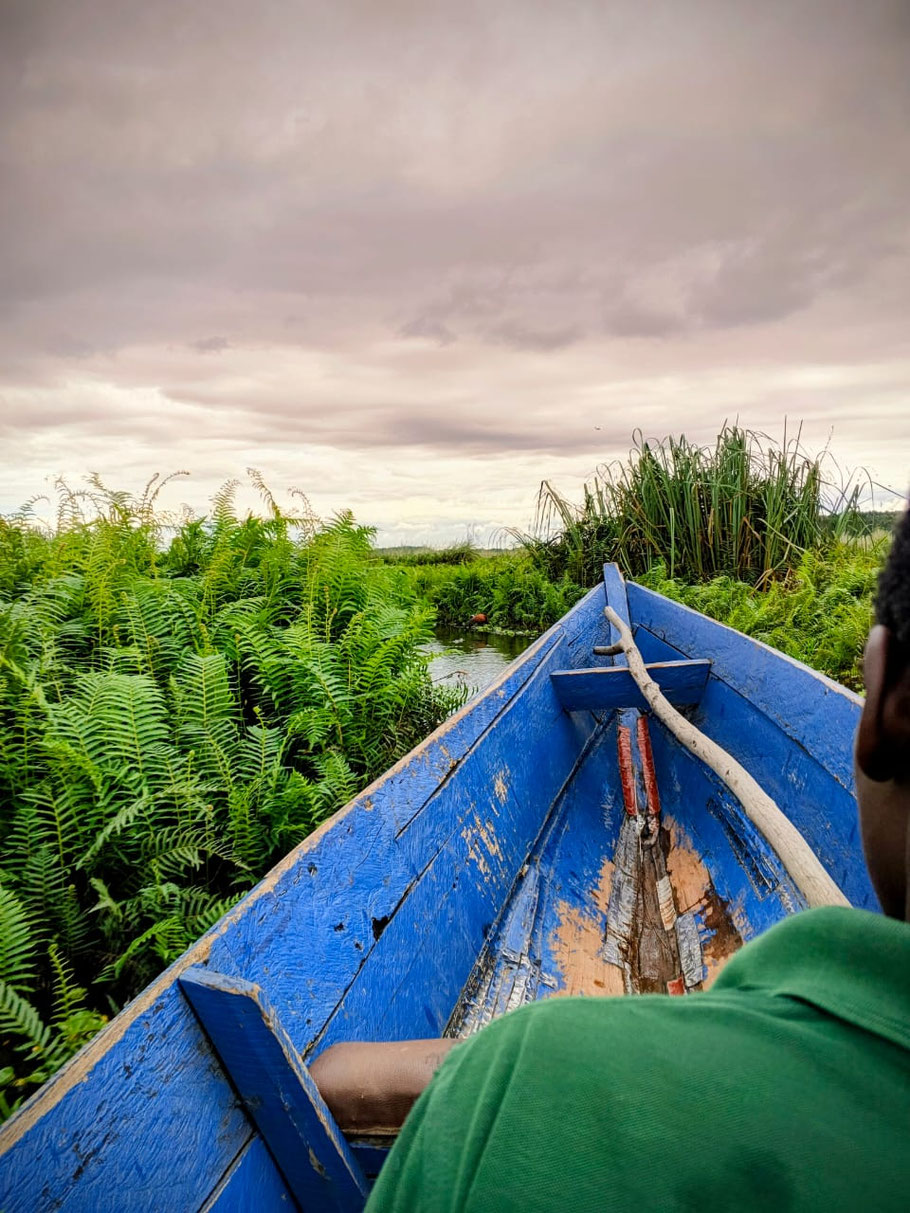
Just a short journey from Entebbe lies one of Uganda’s most magical and underrated natural gems: Mabamba Swamp. Tucked along the northern shores of Lake Victoria, this vast wetland offers a rare blend of tranquility, biodiversity, and unforgettable wildlife encounters—making it a must-visit destination for nature lovers, birdwatchers, and curious travelers alike.
A Curious Secret Behind the Shoebill Sightings
There’s a funny—and very local—explanation for why your chances of spotting a shoebill in Mabamba are so incredibly high.
It goes something like this:
The shoebill stork loves Mabamba. Why? Because it feeds on a particular type of fish found here in abundance.
Now, naturally, you might wonder: why are there so many of these fish in the first place?
Simple. They have almost no predators.
And here’s where the story takes a delightful cultural turn.
The communities living around the swamp don’t eat this fish. Not because it tastes bad or is hard to catch—but because it is part of their tribal totem. In many Ugandan cultures, you are not allowed to eat or harm the animal associated with your clan’s totem.
So, the fish gets to live a peaceful, predator-free life.
The shoebill gets an all-you-can-eat buffet.
And visitors get one of the best wildlife sightings in East Africa.
A perfect win-win-win.
In fact, this connection is so deeply rooted in local culture that the swamp itself is named after this very fish—giving Mabamba both its ecological richness and its cultural identity.
Who knew that ancient traditions, conservation, and birdwatching could come together so perfectly… and with such a charming logic?

A Wetland of Global Importance
Mabamba Swamp (also known as Mabamba Bay Wetland) stretches across thousands of hectares of papyrus marshes and waterways, forming a rich ecosystem teeming with life. Recognized as a Ramsar Wetland of International Importance, it plays a crucial role in biodiversity conservation and ecosystem balance.
Located roughly 12–40 km west of Entebbe, the swamp is one of the most accessible wildlife destinations in Uganda—perfect for a half-day or full-day trip.
The Legendary Shoebill Stork
If there’s one reason travelers flock to Mabamba, it’s the chance to see the elusive shoebill stork—one of the most fascinating and prehistoric-looking birds on Earth.
Often described as “dinosaur-like,” the shoebill stands tall, motionless, and mysterious among the papyrus reeds. Mabamba is considered one of the best places in the world to spot this rare species, with sightings possible year-round.
The swamp’s abundance of lungfish—its favorite prey—makes it an ideal habitat. Watching a shoebill hunt in silence is an experience that feels almost surreal.
A Birdwatcher’s Dream
Beyond the shoebill, Mabamba is home to over 300 bird species, making it one of Uganda’s top birding destinations.
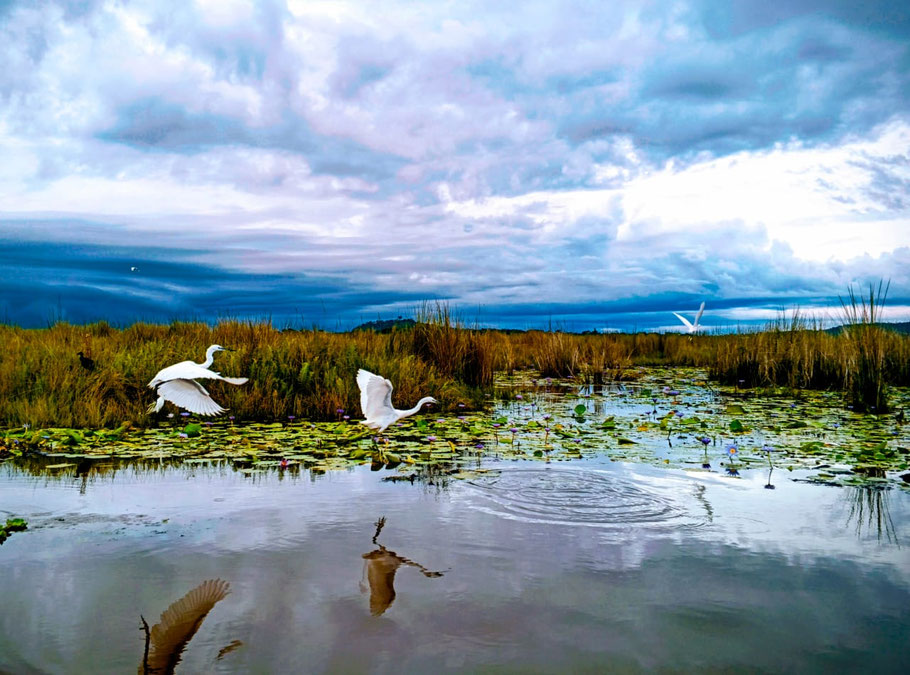
Visitors can expect to encounter African fish eagles soaring above the lake, colorful kingfishers darting across the channels, and rare papyrus specialists like the papyrus gonolek. Migratory species also pass through the wetland, adding to its rich diversity.
Even non-birders quickly get drawn into the beauty and abundance of life here.

Exploring Mabamba: What to Expect
A visit to Mabamba is all about slowing down and immersing yourself in nature.
The most popular way to explore is by a guided canoe or motorized boat ride through narrow channels carved into the papyrus. These quiet journeys allow for close-up wildlife encounters and a peaceful experience of the landscape.
Birdwatching tours are highly recommended, as local guides are skilled at spotting even the most elusive species, including the shoebill.
Visitors can also explore parts of the wetland on foot, enjoying scenic views and the surrounding countryside. Along the way, you may encounter local fishermen using traditional methods, offering insight into daily life around Lake Victoria.
Getting There
Reaching Mabamba Swamp from Kampala is, at least in theory, quite straightforward. The distance is relatively short, and under ideal conditions, the journey takes around 2.5 hours. In reality, however, getting there can turn into a small adventure of its own—especially if you rely entirely on Google Maps without double-checking the route.
There are two main ways to reach Mabamba:
By road via Entebbe and Nakawuka–Kasanje. And via the Nakiwogo–Buwaya car ferry across Lake Victoria.
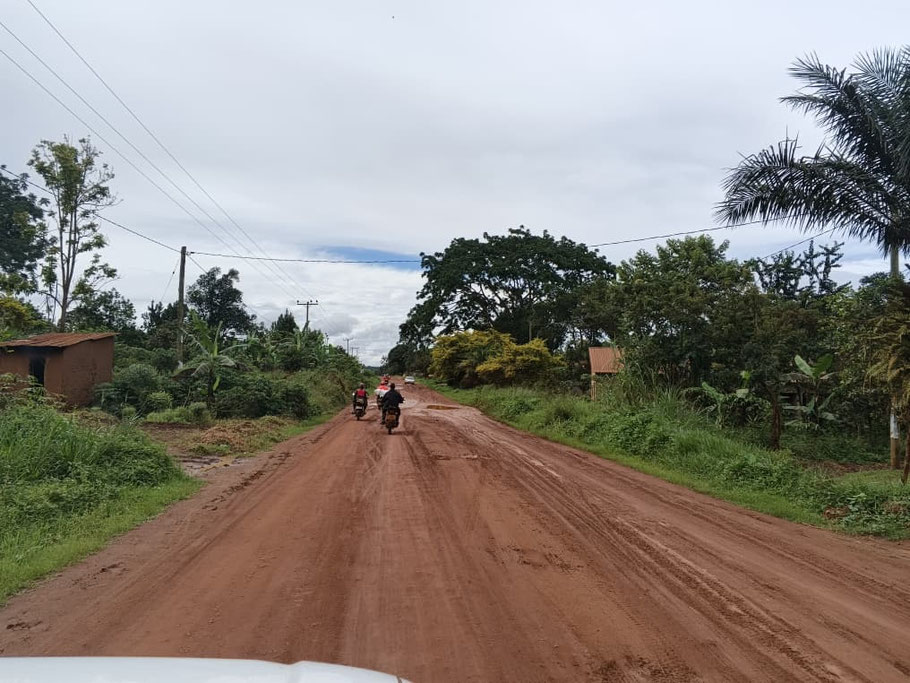
I personally didn’t pay much attention to the route. I simply clicked “start” on Google Maps and started driving. About an hour into the journey, I casually glanced at the map—only to realize that my route involved crossing Lake Victoria. That felt… ambitious. I was quite certain there is no bridge.
Before I could even question it properly or turn around, I found myself slowly rolling into a narrow street packed with cars. Moments later, it became clear: I had been funneled straight into the queue for the car ferry.
At that point, there was no easy way out. The street was too tight to turn around, and cars were lined up behind me. I was committed—whether I liked it or not.
A friendly police officer soon brought clarity (and a bit of calm):
the ferry would resume operations in about two hours, after its lunch break.
So there I was—unexpectedly stuck, engine off, somewhere near the shores of Lake Victoria.
Thankfully, I was prepared in the most important way: I had packed an African tea and a chocolate croissant. What could have been a frustrating delay turned into a surprisingly peaceful, improvised coffee break in the car.
Sometimes, travel in Uganda doesn’t go exactly as planned—but that’s often where the best stories begin.
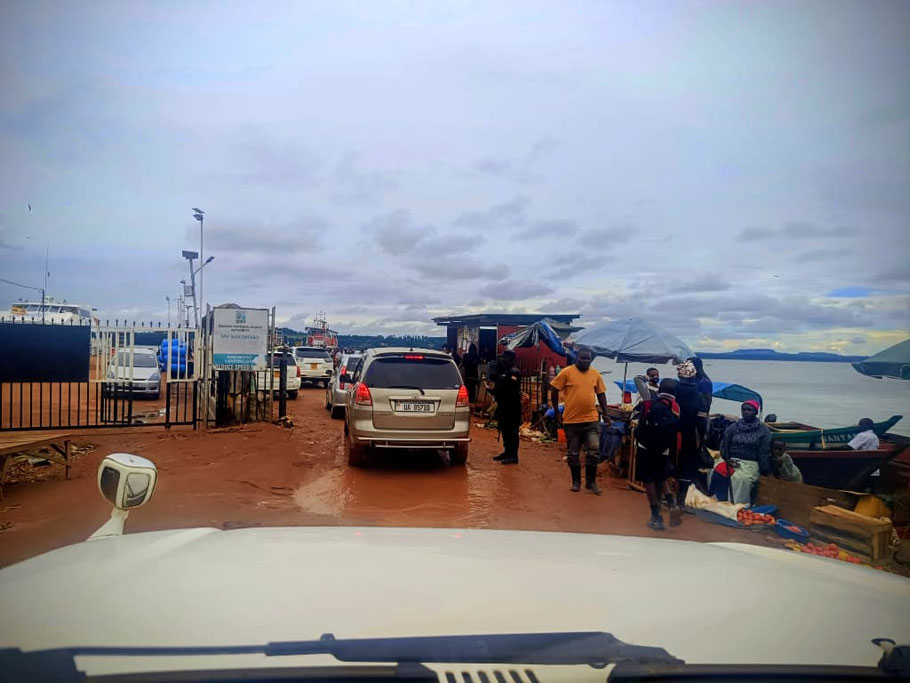
The ferry costs 30.000 UGX per vehicle. You can contact Esmira, who works at the terminal. She is happy to give you information about schedules and pre-registration: 0756229140.